
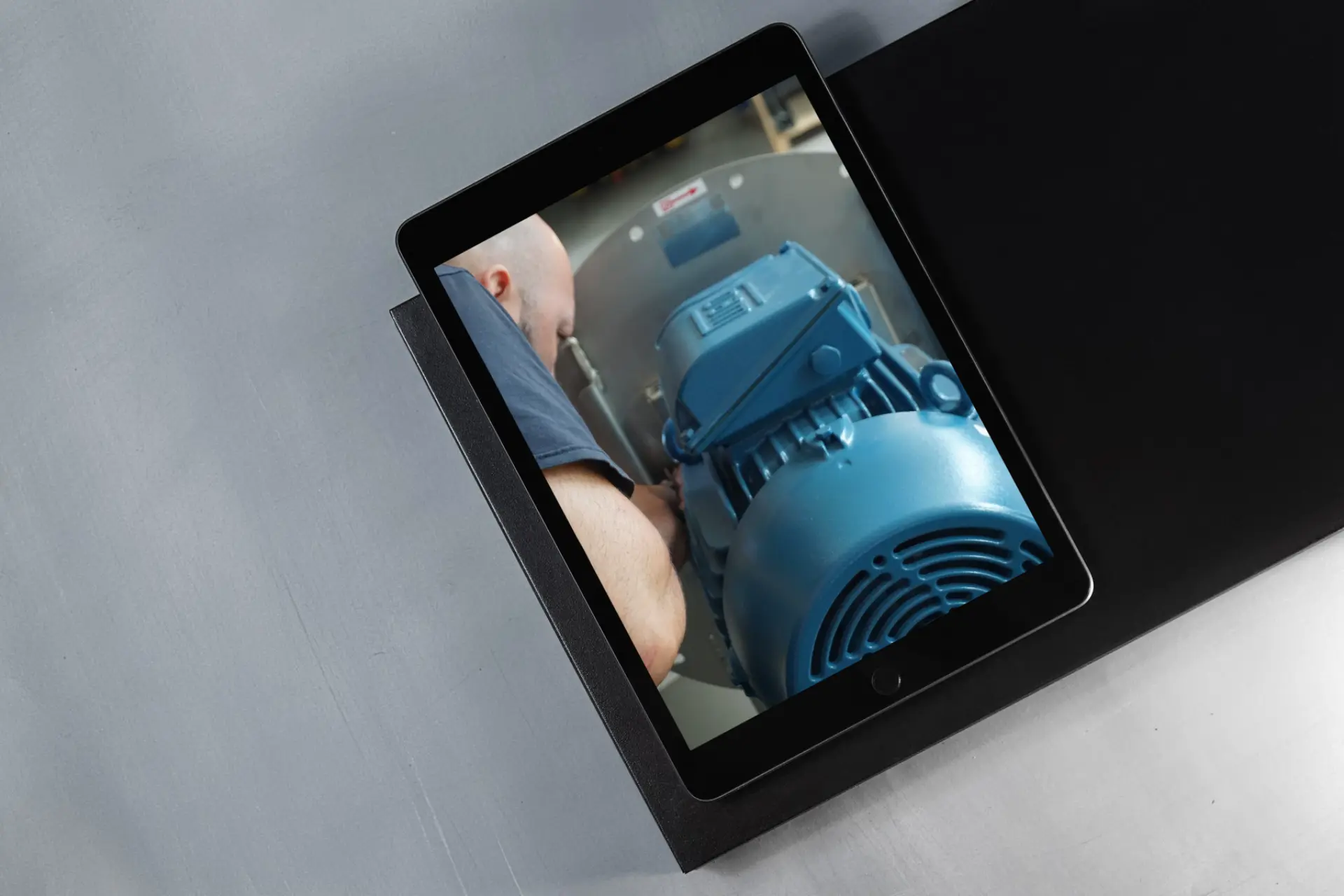
Technical guide: Regulatory article, scope, efficiency classes, and what changes for those needing to replace a motor
When a motor fails and needs quick replacement, the temptation is to simply pick the first model that matches the required power and voltage. However, this risks overlooking a crucial factor: since 2021, the European Union has mandated minimum energy efficiency requirements for electric motors placed on the market under Ecodesign Regulation (EU) 2019/1781. While not new, this regulation remains little known among maintenance and purchasing professionals; understanding it helps ensure the selection of a compliant motor, avoiding surprises during testing or CE marking.
Index
What is EU Ecodesign Regulation 2019/1781?
To which engines does it apply?
The two application phases
What IE3 and IE4 mean in practice
The regulation also applies to inverters
What to do if you need to replace an engine
How we arrive at the right choice
FAQs and quick answers
What is EU Ecodesign Regulation 2019/1781?
European Commission Regulation (EU) 2019/1781 establishes minimum ecodesign requirements for electric motors and variable speed drives commonly known as inverters placed on the European market. It entered into force on 14 November 2019, replacing the previous Regulation (EC) 640/2009 and significantly expanding the scope of application regarding both the types of motors covered and the power range, which now extends from 0.12 kW to 1,000 kW. The stated objective is to reduce energy consumption and greenhouse gas emissions associated with electric motors, which alone account for a very significant share of the electricity generated within the Union.
To which engines does it apply?
The regulation applies to three-phase induction electric motors powered by a sinusoidal voltage at 50 Hz or 60 Hz, with 2, 4, 6, or 8 poles and a rated voltage of up to 1000 V. In its updated version, it also covers self-braking motors, certain categories of explosion-proof motors, and starting from the second phase of implementation, single-phase motors. Motors designed specifically for electric traction vehicles and certain special applications listed in the text of the regulation are excluded.
The two application phases
The regulation entered fully into force in two successive stages.
- Phase 1, from July 1, 2021: The IE3 efficiency class has become the minimum requirement for CE marking for most three-phase motors covered by the regulation, with IE2 required for lower power ratings. For inverters, a minimum efficiency threshold corresponding to the IE2 class has been introduced.
- Phase 2, from July 1, 2023:The IE4 class has become mandatory for single-speed, three-phase motors with 2, 4, or 6 poles in the 75 to 200 kW power range. The scope has also been extended to include certain categories of explosion-proof motors and single-phase motors.
Today, in 2026, both phases are fully operational. This means that a three-phase motor placed on the European market within the relevant power ranges must meet these minimum requirements in order to bear the CE mark and be legally marketed.
What IE3 and IE4 mean in practice
IE classes indicate a motor’s energy efficiency that is, how much of the absorbed electrical energy is actually converted into useful work versus how much is lost as heat during operation. The higher the class, the lower the losses for a given power output. Ecodesign regulations mandate specific classes based on the motor type and power range, leaving no choice to the individual manufacturer. For guidance on when it is worth opting for IE4 even where IE3 would suffice please refer to our guide on selecting industrial electric motors, it addresses this topic alongside other criteria such as load and the installation environment.
The regulation also applies to inverters
A lesser-known aspect of the regulation concerns variable speed drives specifically inverters for which minimum energy efficiency requirements have been introduced for the first time. However, it does not establish a minimum requirement for the combined motor-plus-inverter system; that assessment is covered by a dedicated technical standard. In practice, this means that when pairing an inverter with a motor, one must consider its efficiency class, not just its electrical compatibility with the motor. We discuss this in detail in our article on when it is advantageous to pair an inverter with a system’s motor.
What to do if you need to replace an engine
Facility operators are not directly responsible for product compliance that responsibility lies with the party placing the product on the market. However, being aware of minimum requirements helps avoid two common scenarios: receiving a non-compliant motor from a negligent supplier, or habitually selecting an efficiency class lower than what would actually be most cost-effective for the specific operating conditions. Checking the CE marking and the efficiency class listed on the nameplate remains the simplest way to ensure compliance and make the most cost-effective choice in the long run.
How we arrive at the right choice
When we propose a motor, we verify that the nameplate data including the efficiency class align with both current regulatory requirements and the actual needs of your system. We carry out this check as a standard part of our quotation process.
FAQs and quick answers
It is the European Commission regulation establishing minimum energy efficiency requirements for electric motors and variable speed drives placed on the European market, in force since 2019 and fully applicable since 2023.
It entered into force on November 14, 2019. Phase 1 is applicable from July 1, 2021, and Phase 2 with additional requirements from July 1, 2023.
Three-phase induction electric motors ranging from 0.12 kW to 1000 kW, with 2, 4, 6, or 8 poles; starting from Phase 2, the range also includes certain categories of single-phase and explosion-proof motors.
These are the two minimum classes required by the regulation, depending on the motor type and power range, with IE4 being mandatory for single-speed three-phase motors between 75 and 200 kW starting in 2023.
Yes, for the first time it introduces minimum efficiency requirements for variable speed drives and inverters as well, not just for motors.
• Technical request
Request a technical configuration or check availability
Fill out the form to speak with an expert. We’ll get back to you quickly for a technical consultation.